
Comércio Square / Terreiro do Paço
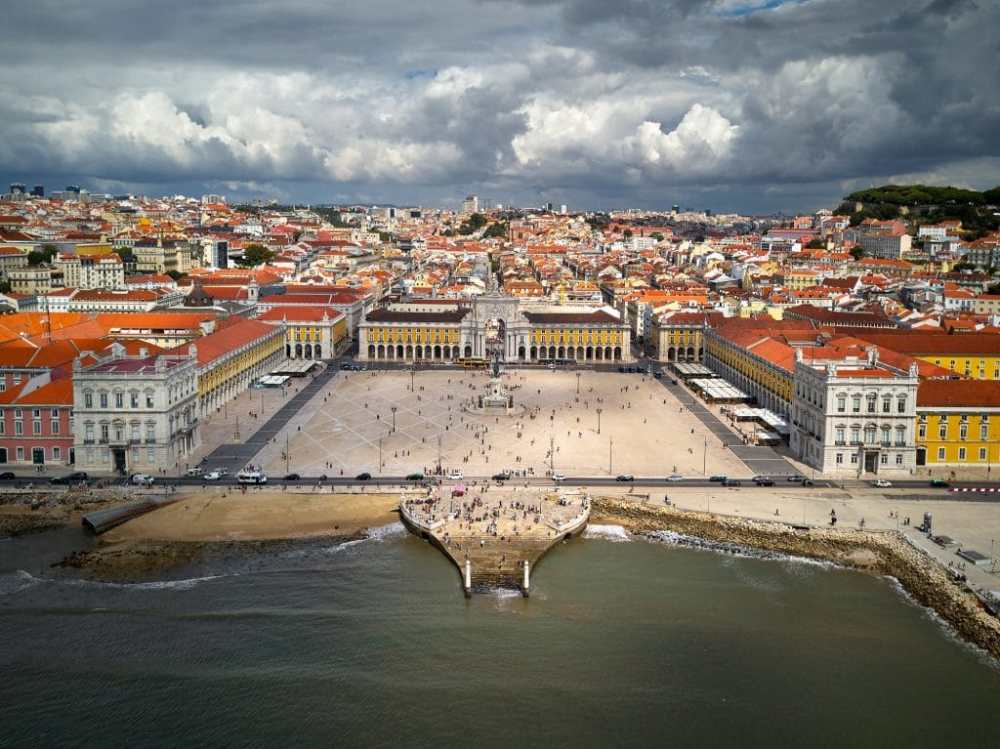
In this blog post, we present to you Comércio Square/Terreiro do Paço, one of the most important touristic attractions in Lisbon due to its relevant role in many defining moments of Portugal’s history.
Comércio Square, still commonly referred to by its old name Terreiro do Paço, it’s a square located in downtown Lisbon, situated near Tagus river – decreed National Monument. It’s one of the biggest squares in Europe with about 36 000 m2. In one of the buildings of the square, you will find the oldest cafe in Lisbon, Martinho da Arcada, and the favorite of the portuguese poet, Fernando Pessoa. At the center of the square, you will find the equestrian statue of D. José. At the end of the square, you will find the Arch of Triumph of Augusta Street. Finalized in 1873, the arch celebrates the reconstruction of Lisbon. From up there, you have an amazing view of the square and of course, of the Augusta street, the most important street of downtown Lisbon.
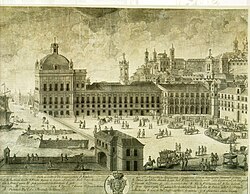
For centuries, the square was occupied by Paço da Ribeira the royal palace of the kings of Portugal since XVI. It was used as a big “reception room” for those that arrived by boat to Lisbon and therefore, could marvel at its beauty. Many Kings and Chiefs of State would disembark there when they would visit the country. In 1755, Lisbon was struck by a strong earthquake that reduced practically the whole city to rubble. The “great earthquake” razed the capital forcing a massive reconstruction throughout the following years. The Royal Palace collapsed with the earthquake and in its place, the Comércio square was built.
The buildings that surround the square were utilized throughout decades by different ministries and public institutions. Today, its utilization is divided between government departments, cultural activities and promotional, hotels, restaurants and cafes.
This square was stage to some important historical events like on the 1st of December of 1640, the old square watched the end of the Iberian Union with the arrest of the Duchess of Mantua and the death of the State Secretary Miguel de Vasconcelos that was thrown through a window from the palace to the Terreiro. And on the 1st of February in 1908 was killed the king D. Carlos and his son the Royal Prince D. Luis while they were passing through the square.
Curiously, after the Revolution of 1910, the buildings were painted pink but recently, they returned to their original color, yellow.
Still, there is much more to learn about Comércio Square and the history behind it, so if you’re interested, don’t shy away from booking a tour with us!